
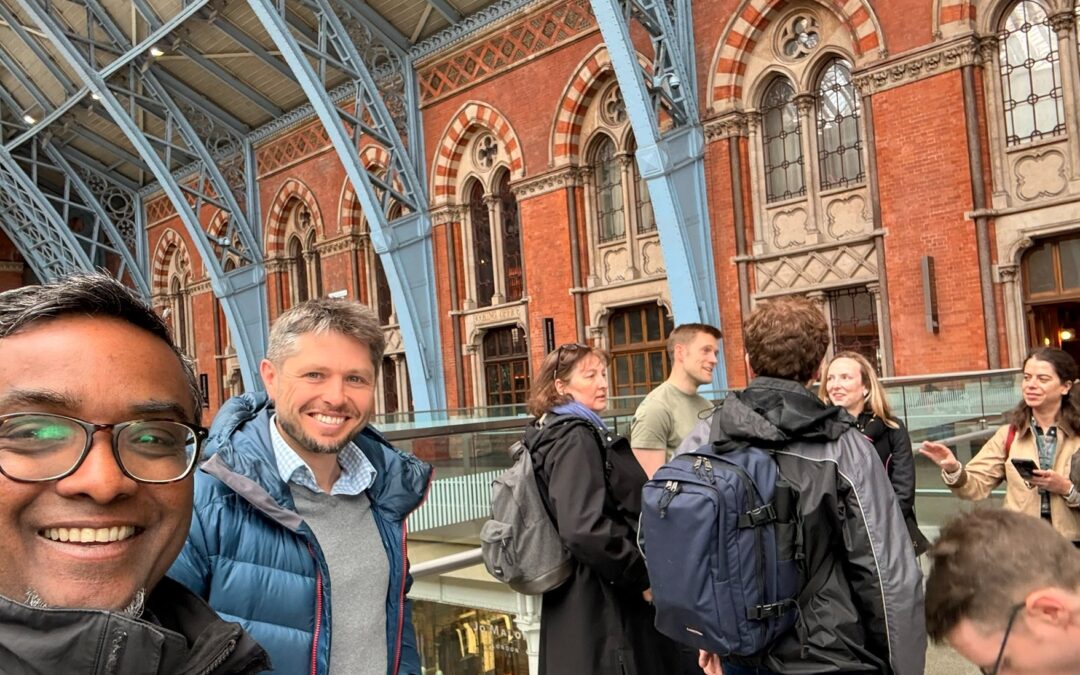
At William J Marshall & Partners, we believe professional development doesn’t always happen in the office. With construction and engineering all around us, every environment presents an opportunity to learn. As part of a recent team trip to Paris, we spent a day exploring some of the city’s most interesting buildings and engineering projects.
In a city with so many notable examples of architecture, from Roman buildings, Gothic and French renaissance to the post-modernist era, creating an itinerary was never going to be straightforward. To solve this, each member of the team was asked to choose a structure of particular interest and deliver a short presentation explaining why it deserved a place on our tour. The result was a fascinating mix of architecture, structural engineering, urban regeneration and forensic case studies that shaped our route around the city.
Opéra Bastille
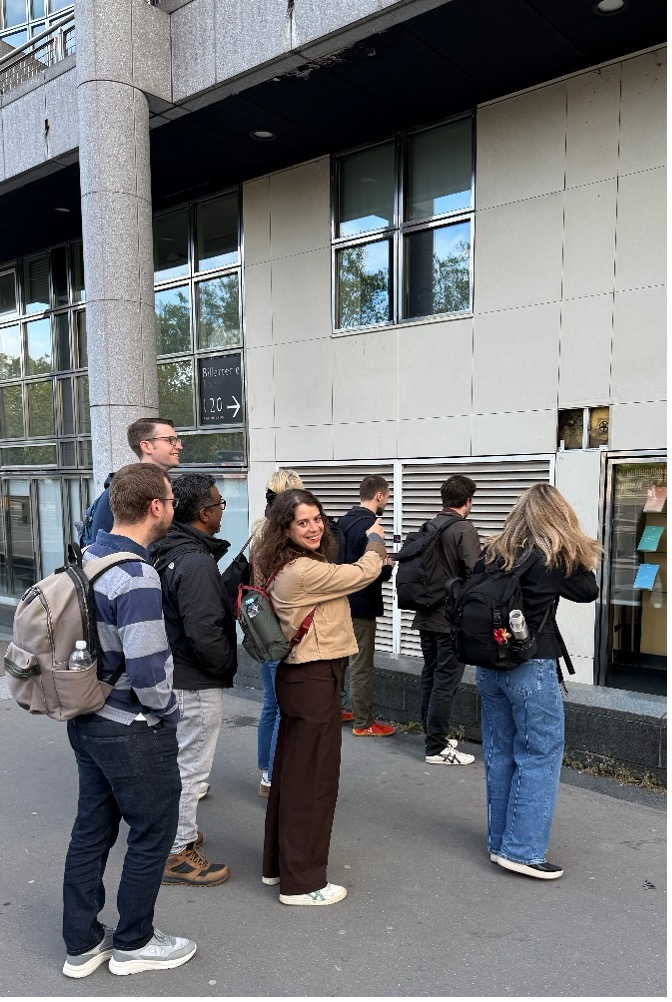
One of the first stops was the Opéra Bastille. Designed by architect Carlos Ott and opened in 1989, the building has become almost as well known for its façade issues as its performances. Originally clad with some 36,000 limestone panels, problems with the cladding caused some panels to fall off. This led to safety concerns and extensive remedial work, with further renovations planned.
For a forensic engineering consultancy, it was an obvious choice. Understanding why buildings fail can be just as valuable as studying why they succeed, making it a perfect discussion point during the trip. It also helped that it was conveniently located just outside our metro station.
Coulée Verte René-Dumont
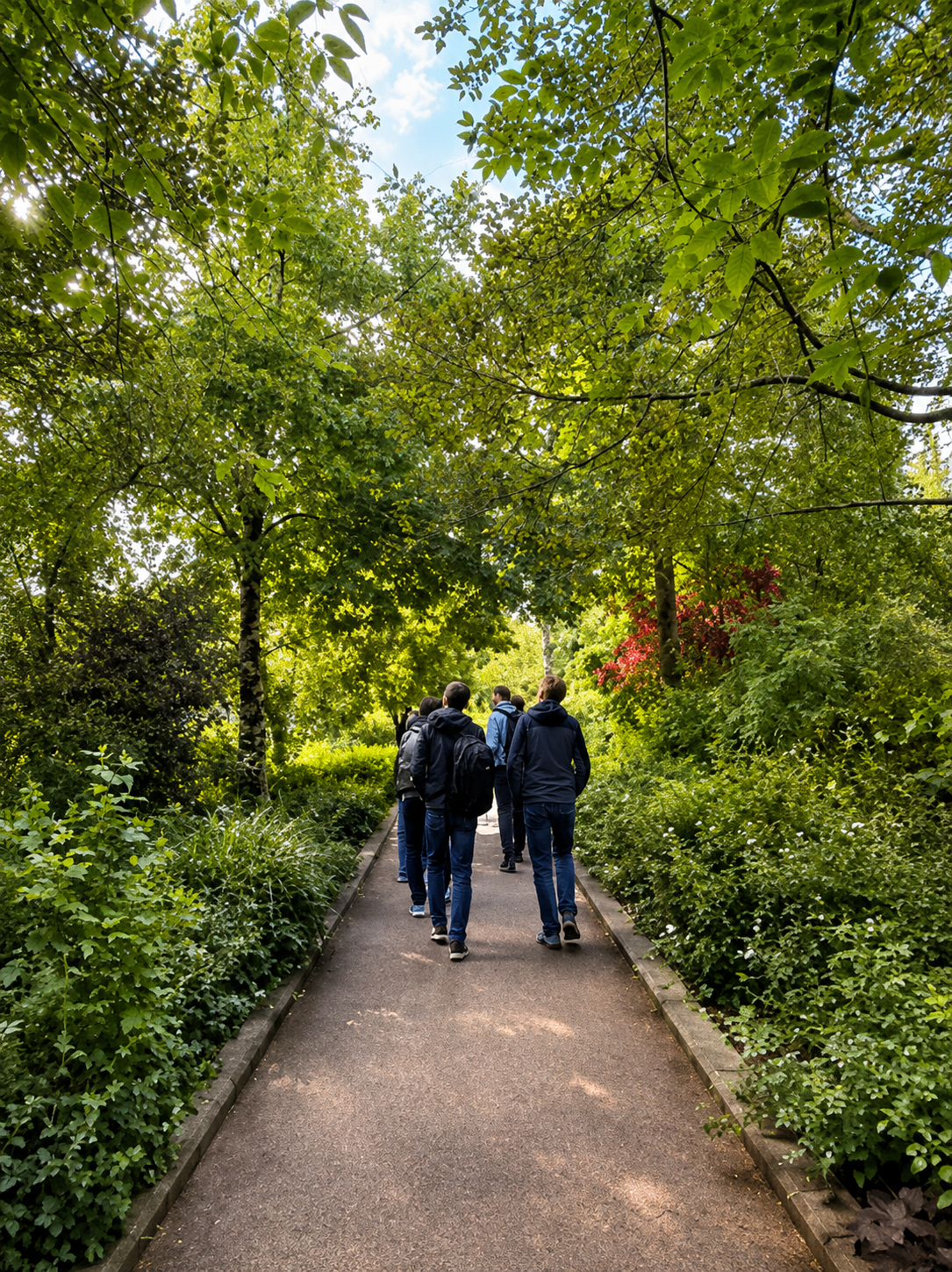
Next came the Coulée Verte René-Dumont, the world’s first elevated park built on a disused railway line in 1993.
Long before projects such as New York’s High Line, Paris demonstrated how obsolete infrastructure could be transformed into valuable public space. Stretching nearly 5 kilometres through the 12th arrondissement, the route combines landscaped walkways with the Viaduc des Arts. Here, former railway arches have been repurposed into workshops and artisan businesses.
Designed by landscape architect Jacques Vergely and architect Philippe Mathieux, the Coulée Verte René-Dumont was an important part of the regeneration of eastern Paris that took place in the 1980s and 1990s. It provided an excellent example of how engineering, landscape architecture and regeneration can work together to breathe new life into existing structures.
Morland Mixité Capitale (La Félicité)
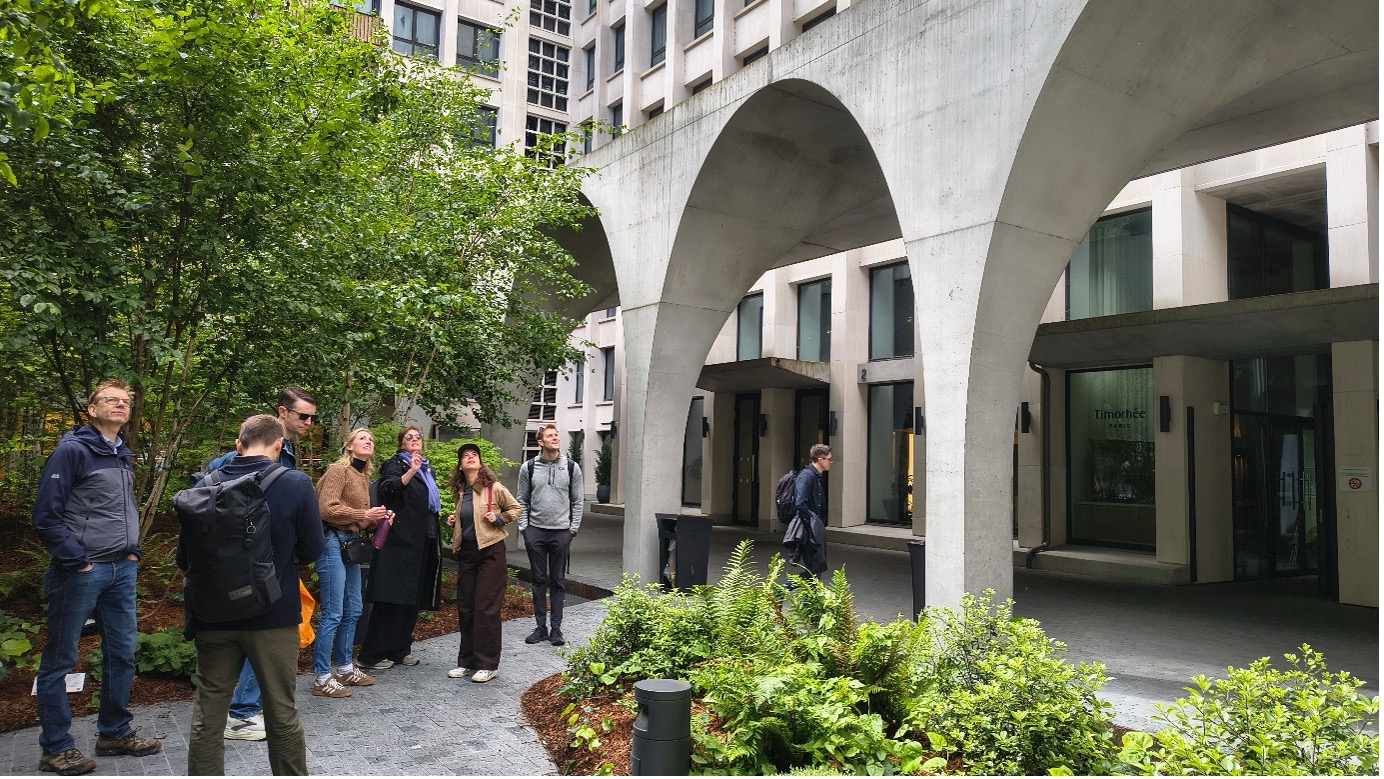
The redevelopment of Morland Mixité Capitale, also known as La Félicité, sparked plenty of discussion within the team.
David Chipperfield Architects Berlin and CALQ architects, together with engineers Bollinger + Grohmann, Somete, and Knippers Helbig, made a revolutionary decision on this project. Rather than demolishing the original 1960s concrete structure, the project retained and adapted much of the existing frame. The scheme transformed the building into a mixed-use development that now includes housing, offices, hotels, public spaces and rooftop gardens.
For our team, it was a great example of how structural constraints can inspire innovative design solutions while supporting sustainability through the reuse of existing buildings.
Fondation Cartier
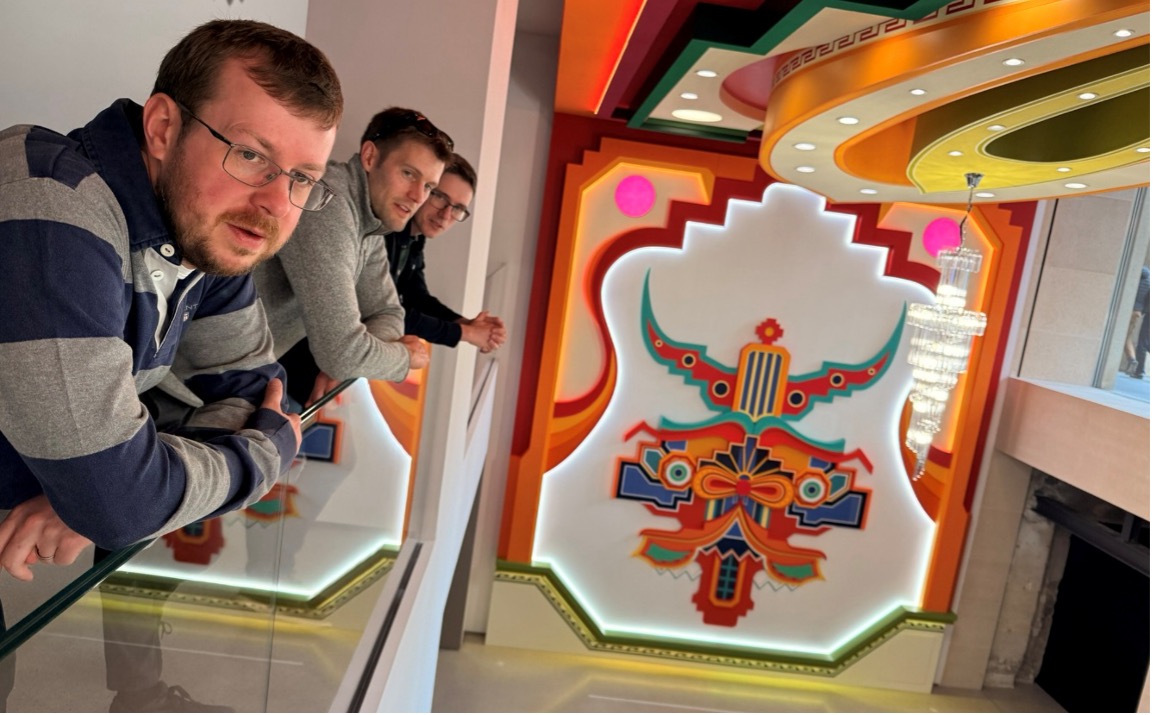
One of the most technically ambitious projects on our shortlist was the new Fondation Cartier, designed by Jean Nouvel and completed in 2025. The project preserves the shell of a 170-year-old former department store while completely transforming the function and performance of the interior.
At the centre of the design are five platforms, each measuring between 200 and 340 square metres and weighing hundreds of tonnes. Suspended on exposed cables, the platforms can be moved up or down to create different gallery arrangements. This in turn, allows the museum to be reconfigured depending on the exhibition. The structure, mechanical systems and architecture therefore work together as one adaptable machine rather than as separate elements.
This created a complex engineering challenge. The new systems had to be introduced within the existing load-bearing masonry, requiring careful structural intervention and a detailed understanding of the historic fabric. The building also had to be designed for a range of possible layouts and load cases, rather than one fixed arrangement.
The extensive use of glass for transparency added further challenges around façade performance, temperature control and visitor comfort. Safety and evacuation strategies also needed to remain effective as the internal layout changed.
For the team, the Fondation Cartier was a particularly interesting example of how engineering can support architectural flexibility. It shows how an existing building can be retained while being transformed into something highly technical, adaptable and completely different from its original use.
Bibliothèque François Mitterrand
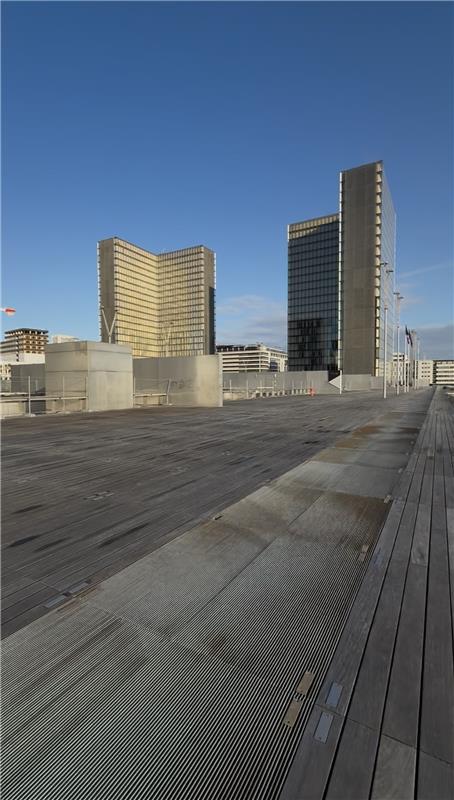
The Bibliothèque François Mitterrand, designed by Dominique Perrault and completed in 1995, is one of Paris’s most recognisable modern landmarks. Its four L-shaped towers, designed to resemble open books, frame a vast central courtyard, creating a striking civic space that has become an icon of contemporary French architecture.
What appears to be a minimalist design above ground conceals an impressive feat of engineering below. Rather than placing the public reading rooms within the towers, the library’s main public spaces sit below ground level. This arrangement meant the project required extensive excavation alongside the River Seine followed by the construction of a watertight basement. The scheme presented significant structural and geotechnical engineering challenges throughout design and construction.
Built on former industrial land with compressible alluvial soils and a high groundwater table, the site required a 15-metre-deep reinforced concrete diaphragm wall around its 1,300-metre perimeter. These allowed excavation to around 10 metres below quay level while resisting earth and hydrostatic pressures.
With such a large proportion of the building below river level, hydrostatic uplift became another key design consideration. The weight of the concrete basement box and a permanent anchoring system work together to counteract buoyancy, preventing the structure from effectively “floating” within the ground.
Beyond the engineering, the project also transformed a former industrial riverside site. It acted as a catalyst for the wider redevelopment of the Rive Gauche district. Today, the surrounding area is home to universities, public spaces and new infrastructure.
More Than Sightseeing
While the trip gave us the opportunity to spend time together as a team experiencing one of Europe’s most iconic cities, it also highlighted something that’s central to the way we work at William J Marshall & Partners.
Every building tells a story. Sometimes it’s about innovative design, sometimes it’s about overcoming engineering challenges and, occasionally, it’s about understanding where things have gone wrong. Looking at projects through that lens encourages discussion, challenges assumptions and helps us continue learning from the built environment around us.
Our presentations may have started as a fun way to decide where to visit, but they quickly became one of the most valuable parts of the trip. The team turned a city break into an opportunity to share knowledge and see engineering and architecture from different perspectives.
As always, should you need help or advice on architectural or engineering matters, get in touch with one of the team today.