
Introduction
In our latest case study, we discuss some of the issues that can arise on site during the construction of piled foundations. In the example given, the pile design changed after the works commenced, resulting in delays to the project, which had been blamed on unforeseen ground conditions. Our investigation revealed however that significant shortcomings in workmanship were the cause of these issues.
Background
This project involved the installation of continuous flight auger (CFA) piles on a site in the UK with weak underlying chalk. We were appointed by the client to investigate and advise on the causes of issues during installation of the piles which led to changes to the design.
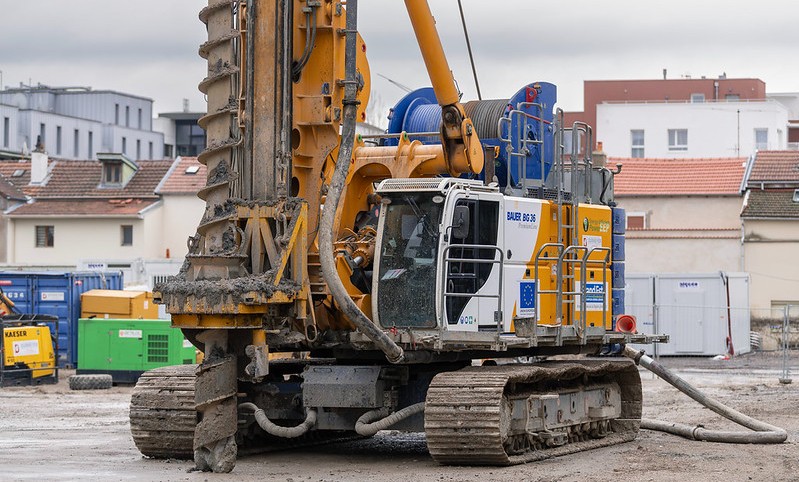
CFA piles are formed by screwing a hollow stemmed 'auger' (which is effectively a large drill bit) into the ground to the required depth. Concrete is then injected through the tip of the auger whilst it is slowly extracted from the ground. Finally, steel reinforcement is plunged into the wet concrete to complete the pile. An example of a CFA piling rig is shown above.
Use of CFA Piles
Whilst in our view CFA piles were a reasonable design solution in the circumstances, their successful construction would depend on proper installation and workmanship.
Installing CFA piles is largely a blind process, which is reliant on instrumentation and monitoring. The rate of auger extraction for example must be carefully controlled to reflect the rate at which concrete is introduced to form the pile.
On this site, installation of the CFA piles commenced but was abandoned following reports of excessive concrete consumption and 'slumping' of the concrete in certain piles.
The contractor reported that the cause of these issues was unforeseen voids in the ground and that a different approach was required. As a result, an alternative arrangement of driven piles was installed instead of the specified CFA piles. This change to the design had cost implications and led to significant delays.
Inaccurate Records
Upon reviewing the available piling records and design and construction information, the William J Marshall team identified that the contractor's piling records were erroneous. The quantity of concrete reported by the contractor as having been installed was about double the amount of concrete that had actually been delivered to site and used for the piles.
Correcting for this error offered a clear explanation of the cause of the issue. Excessive concrete had not been used and there was no evidence of unforeseen voids in the ground. Instead, it was apparent that the equipment had not been properly calibrated and that the monitoring and the control of concrete on site was inadequate. Interrogation of the records also identified certain other issues with workmanship that compounded this problem.
In light of this, we concluded that shortcomings in workmanship, rather than unforeseen ground conditions, were the cause of the issues with the piles. This in turn had led to changes to the design and associated delays. This independent technical advice meant the client was properly informed when negotiating with the contractor and led to a successful outcome.
Conclusion
The foregoing highlights the importance of adequate workmanship when installing CFA piles in chalk. It also shows the need to carefully interrogate the causes of significant changes to the design during construction. With careful examination it was possible to identify the true cause of the issues encountered and resolve what could have been a costly dispute.
For more information and support on matters like this, please don’t hesitate to get in touch with the team today.
NB - Image credits creative commons licence 4.0, Alexandre Prevot via Flikr.